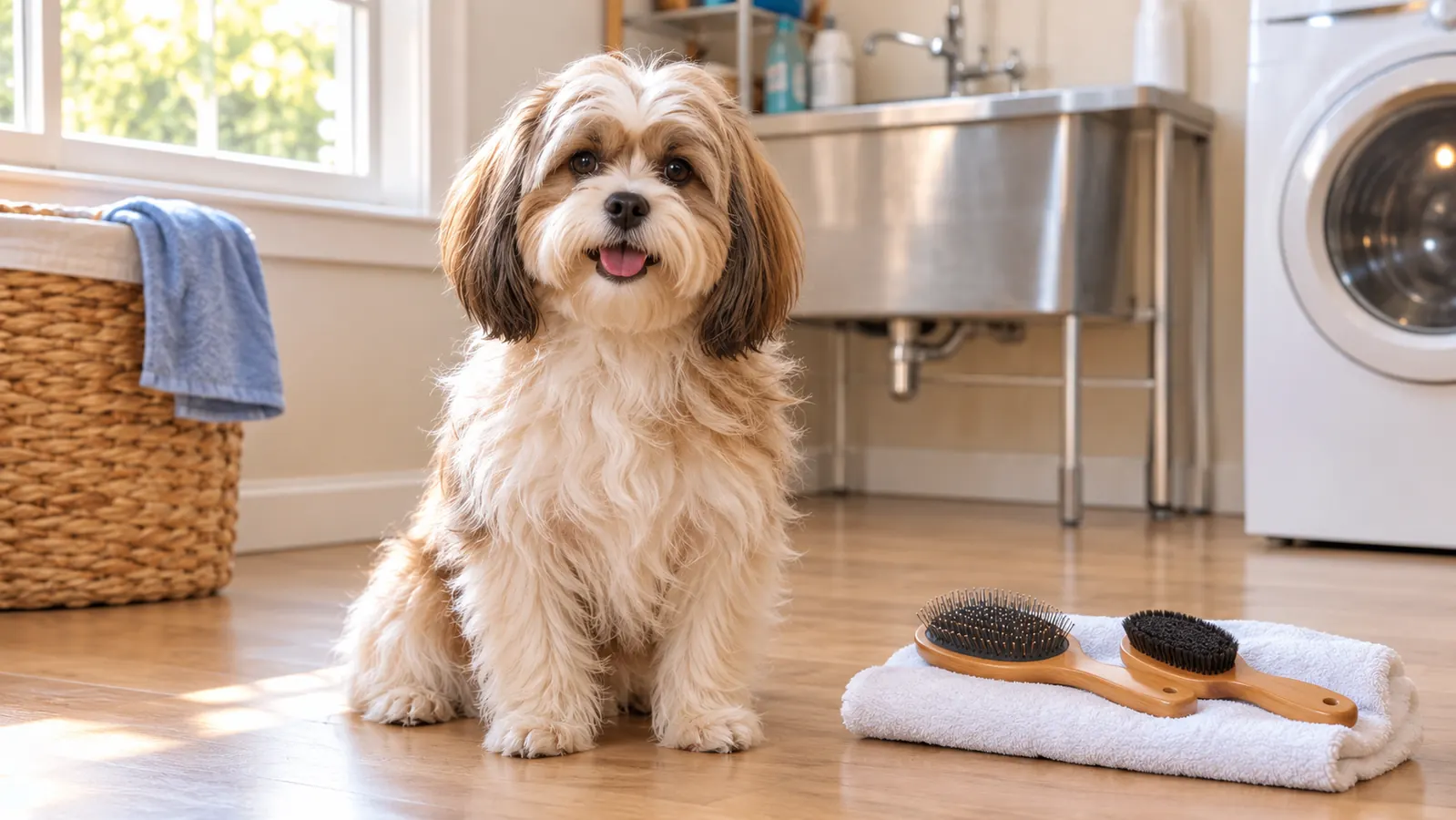
Start with the brush that is already in your drawer. Most Shih Tzu owners I know bought a pin brush first, because it was hanging on a peg near the register and the package said gentle. I did too. Three weeks later Mochi had a mat behind her left ear the size of a marble, and I was standing in the laundry room holding scissors and feeling sick about it. That is the short answer to this whole comparison: a standard pin brush is a decent tool that was not built for this coat, and the Chris Christensen Big G slicker was built for exactly this coat and asks more of your wallet because of it.
Which is not the same as saying the pin brush is useless. It still lives in my house, and it is the brush I reach for on Mochi's muzzle and on the days I am only tidying her topknot. What follows is how each one behaves on a 13-pound Shih Tzu in a medium puppy cut, what I watched over two years of grooming at home, and which one I would hand to you if you told me your dog mats behind the ears.
| Chris Christensen Big G Slicker | Standard Pin Brush | |
|---|---|---|
| Upfront cost | More than I wanted to spend on a brush, and I hesitated for weeks | Low enough that I bought it without thinking about it |
| Coat penetration | Dense stainless steel pins reach down through a thick puppy cut in a few passes | Straight pins ride on the surface unless I section the coat by hand first |
| Mats behind the ears | Works a mat loose from the outer edge inward without pulling skin | Skips over the mat or catches it, and Mochi yelped more than once |
| Thin skin on the face and paws | Too much brush for a muzzle, I use a comb or the pin brush there | Rounded pin tips are gentler around eyes, nose and toes |
| Hand fatigue | Wood handle, non-slip grip, curved back, my thumb does not ache after twenty minutes | Slim handle is fine for a two-minute tidy, not for a full session |
| Cleaning the brush | Hair lifts off the pins in one pad and goes in the trash | Hair slips down between the pins and takes a comb to clear |
| How long it lasts | Two years in, the pins are still straight and the grip is intact | The pin pad on mine went soft inside a year |
| Best for | Thick, long or curly coats that mat without warning | Short clips, topknots, faces, and handing to a dogsitter |
How I Tested Both on Mochi
I am not a groomer. I am a retired school nurse in Fort Worth who got tired of paying for shave-downs, so I learned on my own dog and made plenty of mistakes in the laundry room along the way. Mochi is seven, thirteen pounds, gold and white, and she wears a medium puppy cut with a longer topknot because it suits her face and I like it. Her trouble spots have not changed in four years: mats behind both ears, small knots in the armpits, tear staining under the eyes, and feet she will not let me near. The pin brush came first, out of a bin near the register at a pet store over on Camp Bowie, and it cost so little that I did not think about it for a second.
For the first six months I brushed her with the pin brush only. For the eighteen months after that, the Chris Christensen Big G did the main work and the pin brush stayed on the shelf for faces and tidy-ups. Same dog, same coat length, same utility sink, so it is about as controlled as a kitchen table test gets. Four things I paid attention to: how many passes it took to clear a section, whether Mochi pulled away, whether the brush found mats I did not know were there, and whether my hand was tired at the end. I also wrote the results on the back of a junk mail envelope for the first month, which sounds ridiculous until you try to remember in November which brush you liked back in June.
To keep myself honest I did one silly thing on the first Sunday of every month. I brushed her back with the pin brush first and timed it, then went over that same six-inch strip with the slicker and watched what came out. One June the pin brush took four full minutes and still left a haze of loose undercoat that the slicker lifted in two passes. By the following June I had quit bothering, because the answer never changed. That strip runs from the base of her neck to the middle of her back, and it is the densest patch on her, which is why it tells you the truth about a brush faster than the rest of the dog does.
Where the Chris Christensen Big G Wins
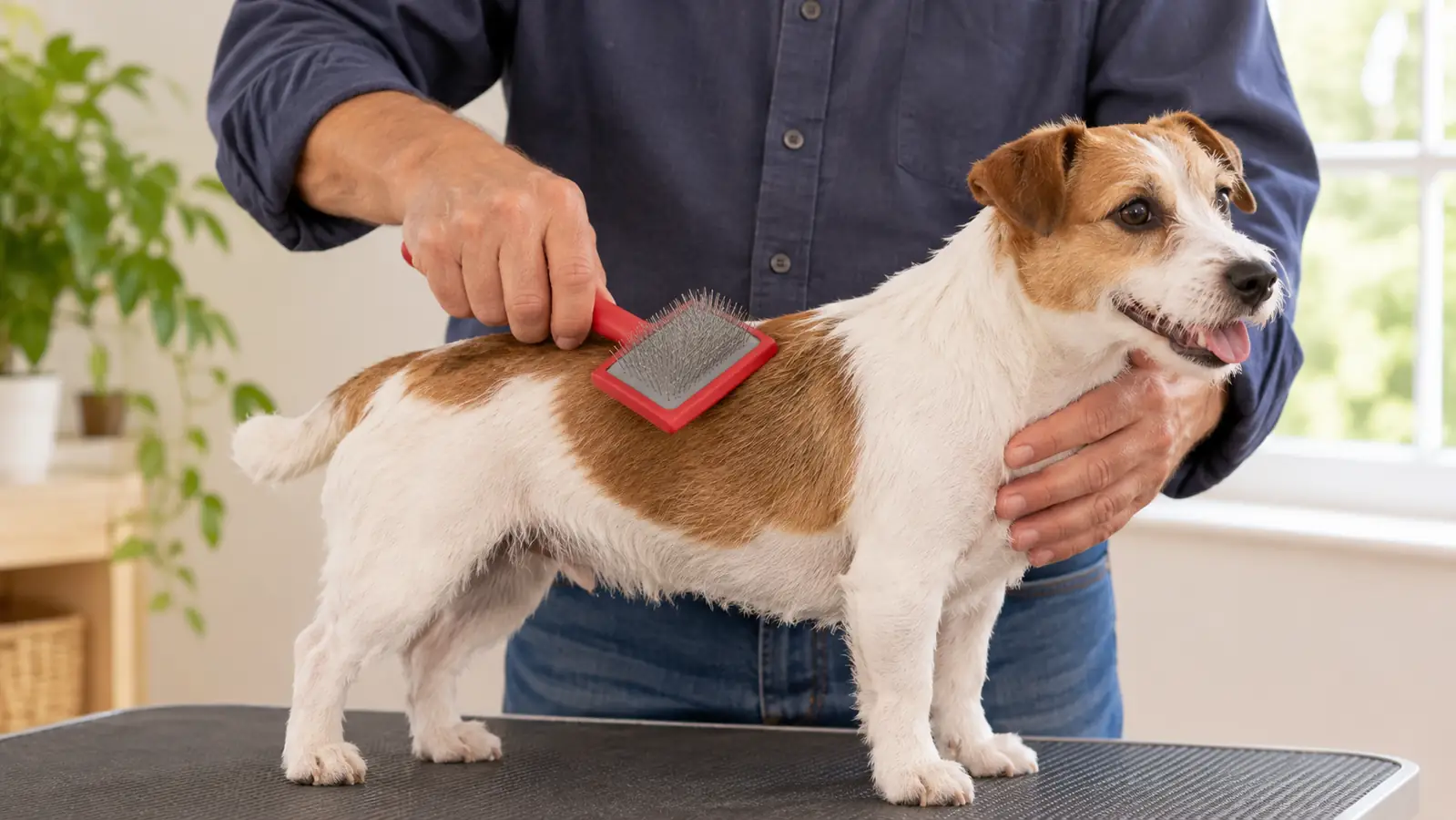
The first difference you feel is depth. The Big G carries 30% more pins than a standard slicker, and on a coat as thick as Mochi's that density is the entire point. A pin brush floats along the top of the coat. I would brush her back for five minutes, decide she was done, then run a metal comb through and hit a wall halfway down. With the slicker, I go over the same area in sections once and the comb passes clean. That matters when you are brushing four or five times a week and you want the job to take ten minutes instead of thirty. The brush itself measures 8 by 4 by 2.5 inches, which is bigger in the hand than it looks in a photo, and for me that means fewer strokes to cover her whole flank.
Mats behind the ears are the reason I switched and never went back. The pins on this brush are fine and closely set, so I can start at the loose outer edge of a mat and work inward a few millimetres at a time instead of dragging the whole knot at once. The curved back gives me a bit of lift so the pins move the coat instead of pressing into the skin underneath. My pin brush, with its flat row of straight pins, either glided past the mat without touching it or caught it hard and pulled. Mochi told me which brush was which every single time. The worst mat she ever had came the spring I was still using the pin brush, after a rainy week when she would not stay off the wet grass and I let her coat go three days without a pass. It took me forty minutes with the slicker, working in from the edge, and she fell asleep on the towel before I finished. With the pin brush I would have been on the phone by minute ten.
The handle is the part I did not expect to care about. It is wood with a non-slip grip, and the back is curved so my fingers settle into it rather than sliding around it while I work. I am sixty-two and there is a touch of arthritis in my right thumb, and twenty minutes with a slim plastic pin brush used to leave my hand aching into the evening. The Big G feels heavier in the hand, which sounds like a drawback until you realise you are no longer squeezing it to keep control of it.
Cleaning is the unglamorous part, and it is where the slicker quietly earns its keep. Mochi's undercoat comes out in a soft grey pad that lifts off the pins in one piece, and I drop it in the trash before it drifts across the laundry room floor. The pin brush holds hair down between the pins, and I have to sit there with a comb picking it out. Thirty seconds against five minutes, twice a week, is not nothing.
Where a Standard Pin Brush Wins
The pin brush wins on two things and I am not going to pretend otherwise. The first is that it is inexpensive and available everywhere. You can pick one up on an errand and never think about it again, and there is real value in a tool that does not require a decision. The second matters more: rounded pin tips are gentler on thin skin. The skin on Mochi's muzzle, around her eyes and on the tops of her paws is not somewhere I want a dense wire slicker, even a well-made one. The pin brush does the topknot and the face, and it handles a clean coat that has nothing to detangle. It lives on the counter next to a metal comb, and on a normal Tuesday it is the only brush I touch, because Tuesday is a five-minute tidy and not a full session.
It is also the easier brush to hand to someone else. When a neighbour watches Mochi for a weekend, I hand over the pin brush and not the slicker, because a pin brush is hard to misuse. A slicker pressed too hard into a mat will teach a dog to hate brushing, and it takes weeks of patient work to undo that lesson. I know because I did it. Early on, before I understood how little pressure those pins need, I dug into a knot behind Mochi's ear, and she yelped and would not let me near that ear for six days. Six days of a seven-year-old dog flinching when I reached for her head. The pin brush would not have done that. If your Shih Tzu lives in a very short clip, or if you genuinely brush every day and never find a tangle, a pin brush is enough, and I would not tell you to spend more than you need to.
The brush that got the mat behind Mochi's ear out without scissors
Dense stainless steel pins, a wood handle with a non-slip grip, and a curved back that gives you control instead of force. It is the first thing I reach for on a thick Shih Tzu coat, and the only brush I have not replaced.
Amazon Check Today's Price on Amazon →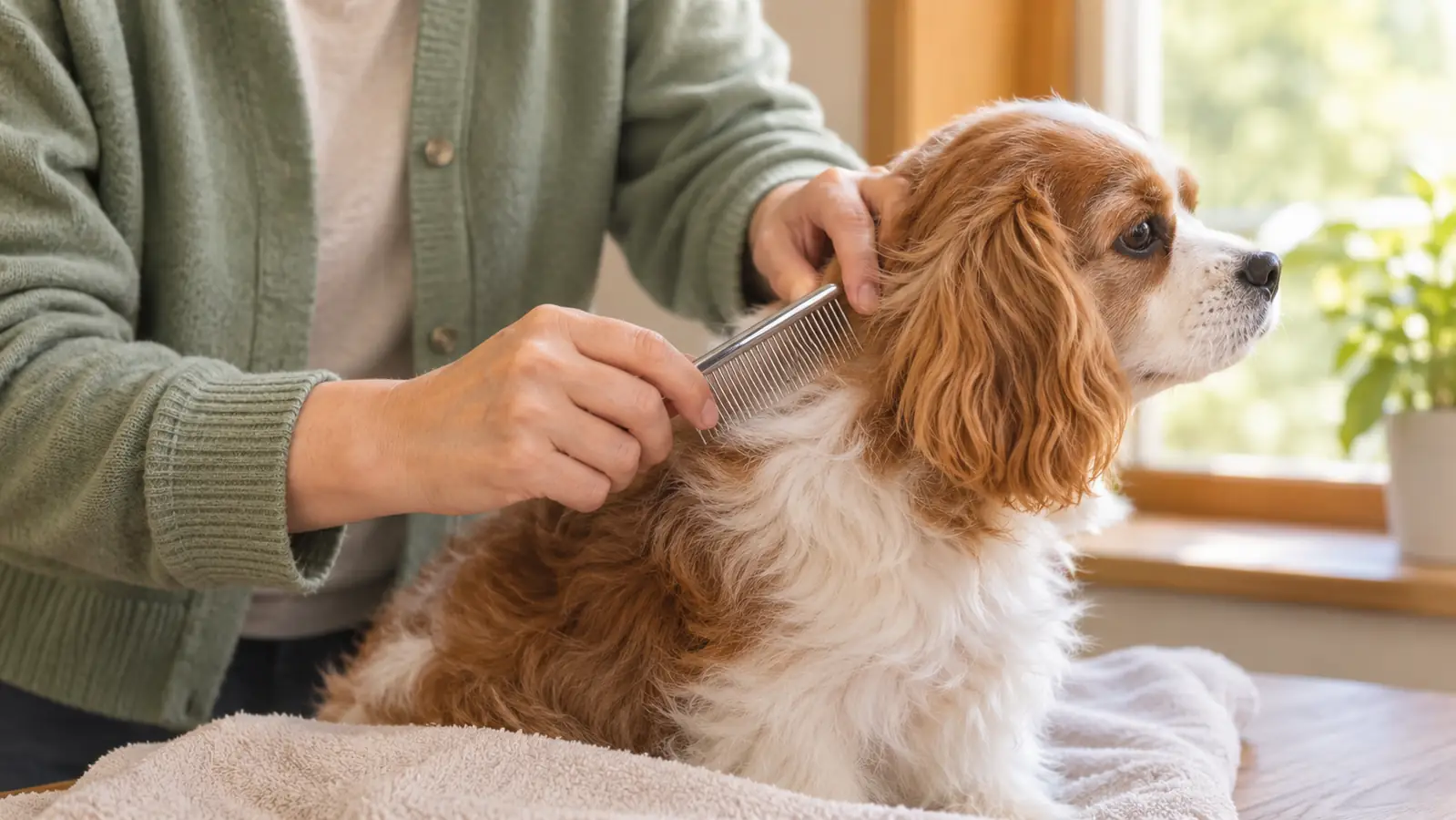
What Two Years of Home Grooming Taught Me
Brushing is not the same thing as grooming, and it took me an embarrassingly long time to understand that. I used to think a session meant running a brush over the dog until she looked fluffy, then wondering why the groomer kept finding mats. The change came when I started working in sections and finishing every section with a metal comb. The comb is the honest tool in the room. If the comb goes through, the coat is done. If it catches, the brush lied to you. Once that clicked, the slicker stopped feeling like a luxury and started feeling like the thing that made the comb pass.
The other lesson is that a mat you can feel is usually older than you think. Mochi gets them behind the ears because her ear leather and collar rub the coat there, and by the time I notice one with a brush it has been forming for a week. So now I check behind her ears and under her front legs with my fingers every other day before I pick up anything. Finding a tangle at the size of a pea takes a minute. Finding it at the size of a marble takes an hour, a lot of apologising, and a phone call I would rather not make. I also keep a small spray bottle of conditioner and water on the shelf above the sink, because a slightly damp coat parts under the slicker pins far more easily than a dry one, and Mochi is calmer about the whole business when I am not yanking.
And it took me two years to admit that coat length matters more than which brush I am holding. When Mochi's puppy cut runs long around the ears and the sanitary trim grows out, no brush saves me, because the hair has already started wrapping around itself. Keeping her ears trimmed short and her armpits clipped close does more for mat prevention than anything else in that laundry room. The slicker then does what it is good at, which is going through the coat that is left. That combination, a sensible trim and a brush that reaches the skin, is what finally got us out of the twice-a-year shave-down cycle I started this whole thing to escape.
A pin brush made Mochi look brushed. The slicker and a metal comb made her actually brushed, and my hand could feel the difference on her back.
Who Should Buy Which
Buy the Chris Christensen Big G if your Shih Tzu wears any length of coat at all, mats behind the ears or in the armpits, and you plan to do most of the grooming yourself. That is the dog this brush was designed for. The extra pin density, the curved back and the non-slip wood handle all point at one job, which is getting through a thick coat in fewer passes without hurting the animal. It is also the brush I would pick for a poodle or a doodle, and the listing says the same.
Buy the pin brush, or keep the one you already own, if your dog lives in a very short clip, if you mostly need something for a face, a topknot or a paw, or if you want a brush you can hand to a dogsitter without a lesson. If you are only buying one and you own a Shih Tzu in a puppy cut, buy the slicker and add an inexpensive pin brush later for the face and feet. That is the order I would do it in if I were starting over, and I say that as someone who did it exactly backwards.
Start with the brush that does the work, then add the cheap one for the face
A 4.7 average across nearly fifteen thousand reviews is not why I kept using it. I kept using it because the comb went through afterward without a fight, and because Mochi stopped walking away when she saw it.
Amazon See the Chris Christensen Big G on Amazon →