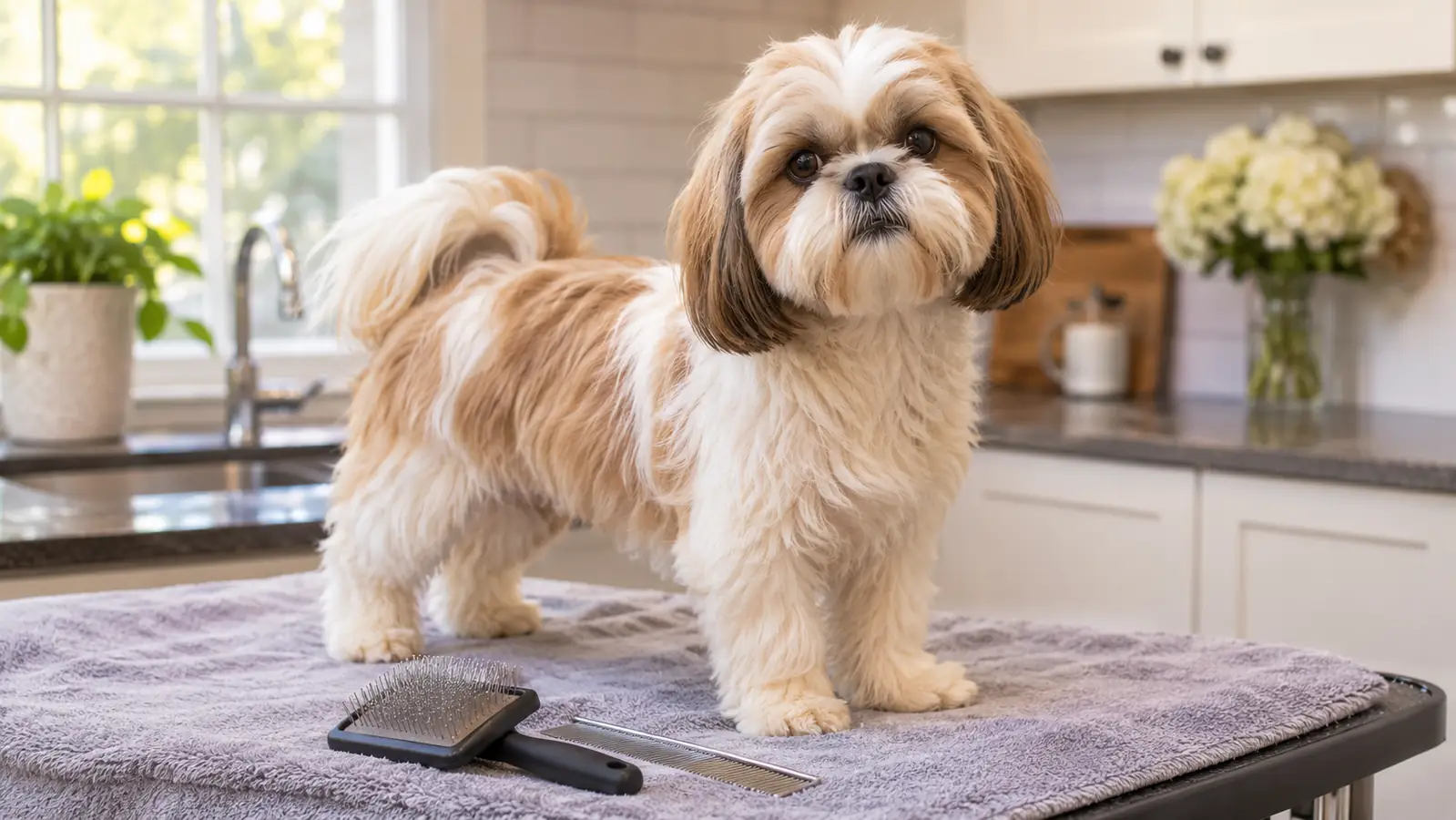
The first time I ran a slicker brush over Mochi's coat, she turned around and stared at me like I had personally let her down. That was four years ago. Her coat was growing back after a shave-down I am still not proud of, and I owned a drawer full of brushes that all did the same disappointing thing: they skated over the top, fluffed nothing, and left the mats behind her ears exactly where they had started.
Then a groomer over in Fort Worth put a Chris Christensen Big G slicker in my hand and told me to give it a month before I made up my mind. I gave it a month. It has been in my hand every week since, through a humid Texas summer, a dry winter full of static, and one long evening involving a burr from the backyard. What follows is what months of real use looks like on a seven-year-old Shih Tzu in a medium puppy cut, written by somebody who bought the brush herself and has the mat-free ears to show for it.
The Quick Verdict
It clears a mat-prone Shih Tzu coat in roughly half the strokes of anything else in my drawer, and my hands do not ache afterward. It is more brush than a casual home groomer needs, and it is not cheap, but it has cut my grooming time and my groomer bills both.
Amazon Check Today's Price →The brush that finally got through the coat behind her ears
This is the tool I reach for first, three times a week, on a coat that mats if I blink. Twelve minutes and a calm dog, most nights.
Amazon Check Today's Price on Amazon →How I've Used It
I am not a groomer. I am a retired school nurse with a utility sink in the laundry room and a dog who forgives me for most things. Mochi gets brushed three times a week and bathed every other Saturday. The brush lives in a mason jar on the counter next to a metal comb and a pair of blunt-nosed scissors, and it is the tool I reach for first about ninety percent of the time.
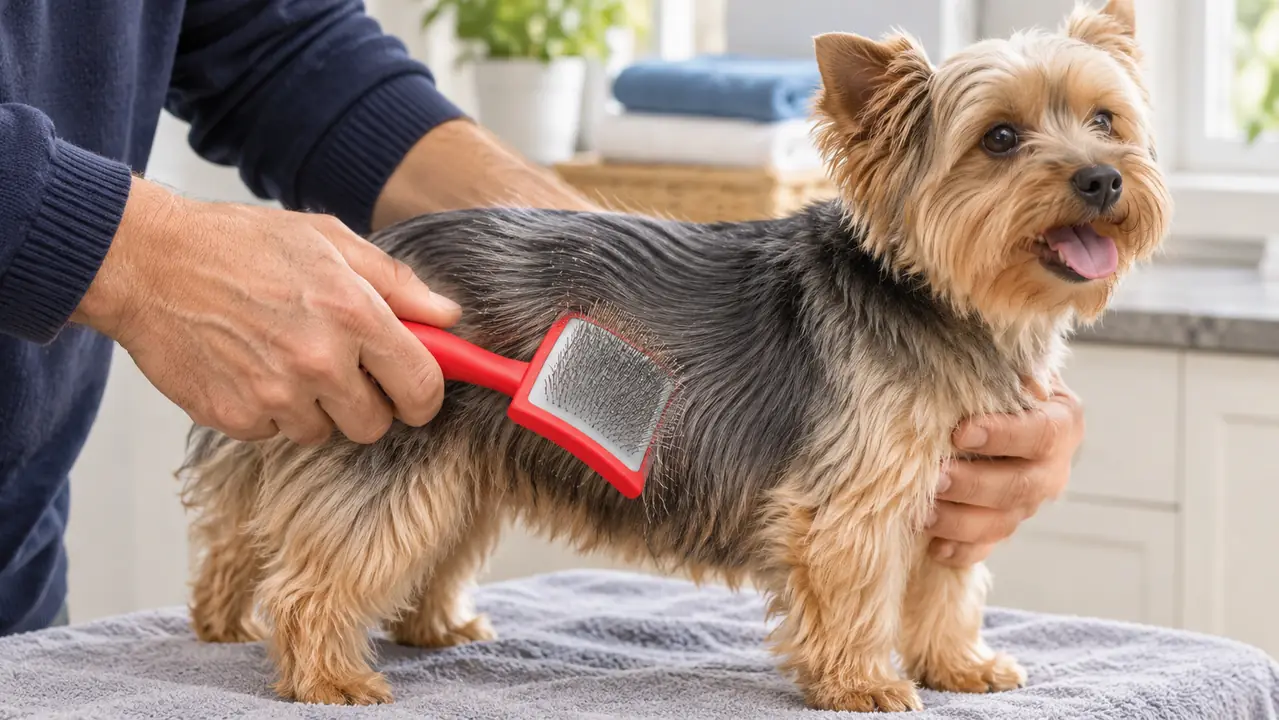
The method took me a while to learn, and it is the reason the brush performs the way it does. I line brush. That means I lift a thin section of coat with one hand, work the brush through that section from the skin outward with the other, then let it down and take the next section behind it. On Mochi that works out to six or seven passes down the back, four on each side, then the legs and the chest. It sounds fussy. It takes about twelve minutes, and I do it while the kettle heats.
What changed over the months was not the brush so much as the dog. For the first two weeks Mochi left the room when she saw it coming. Now she stands on the table and leans into it, which tells you more about how the pins feel on her skin than anything I could write down. She still does not want her feet touched. We are working on it, slowly, with cheese.
What the Big G Actually Is
The specifications matter here, because this brush is unusual in a couple of specific ways. The pins are stainless steel, the handle is wood with a rubberized non-slip grip, and the back is curved far more than a typical slicker. It measures 8 by 4 by 2.5 inches, it comes in three sizes, and the listing claims 30 percent more pins than other slickers of a similar footprint. I did not count them. I can tell you it covers more coat per stroke than the drugstore slicker I used before it, and the difference showed up on the first pass.
The curved back is the part I did not expect to care about. It puts your wrist in a different position, so you are pushing from the shoulder instead of squeezing with your fingers, and after a twelve-minute session my hands feel like they did nothing at all. My old brush left a red dent in my thumb that took an hour to fade. The grip does what it says even with a wet hand, and the whole thing feels like a tool rather than a pet aisle impulse buy.
The pin count carries a tradeoff worth naming up front. More pins means more coat contact on every stroke, which is faster and actually gentler, because you are not going over the same square inch nine times to get the same result. It also means a bigger, denser brush head, and on a thirteen-pound dog that is a lot of brush to manage near a face. More on that below.
How It Performs on a Shih Tzu Coat
Mats on a Shih Tzu form in predictable places: behind the ears, under the front legs in the armpit, along the collar line, and anywhere a harness rubs. The armpits are the ones that used to defeat me. The Big G gets into that hollow because the pins are dense enough to catch the coat and the edge of the head is narrow enough to slide in without digging. I still hold the skin flat with my free hand. I still go slowly. But I get through a small armpit mat in a couple of passes instead of picking at it for five minutes with a comb and a rising sense of doom.
Behind the ears it is the same story. That is the spot where I used to find a hard little knot every single week, and where I once let one get bad enough that the groomer had to clip it out and I had to apologize to a dog. Since switching I have found maybe three knots in the past several months, and each one came out with a few careful strokes rather than a fight. That single change is worth more to me than everything else the brush does combined.
On a damp coat after a bath it is better still. I towel Mochi down until she is barely damp, then brush her out in sections while she dries, and the coat comes up fluffy and separate instead of drying into clumps. The listing calls it a fluff and detangle brush, and for once the description is accurate. The topknot needs a lighter hand, so I use the edge of the brush head with almost no pressure and finish with a comb. This is not a finishing tool on a long topknot. It is the tool that makes the finishing tool possible.
Where It Falls Short
It is a large brush on a small dog, and that is the honest complaint. The head covers a wide strip of back in one pass, but it also means I am always aware of the edges near her eyes and her ears. I do not brush her face with it. I work up to the topknot and no further, then switch to something smaller for the muzzle, because a dense pin brush near an eye is not a risk I am willing to take on a dog who moves.
The pins are firm. They are not sharp, but if you press hard or hit a mat with force, the dog will tell you immediately. I learned that in week one and have not repeated it. Anyone who brushes with a heavy hand should start with almost no pressure until they get the feel of it, because a slicker used wrong will scratch, and this one has enough pins to make that point quickly.
It will not replace a metal comb, and it will not rescue a coat that has already felted into a solid pelt. When Mochi came home from that shave-down, no brush on earth could have saved what was left. Once a mat has tightened against the skin, the kind thing is a clipper, not a brush and a lot of optimism. I also would not buy it for the feet. Mochi's feet are a two-person job with a small comb and a stack of treats, and this brush does not change that arithmetic.
And it is a specialty tool. A drugstore slicker will get a short pet clip reasonably presentable. The Chris Christensen Big G earns its keep only if you are doing this weekly on a coat that keeps growing, which is exactly the situation in this house and not the situation in every house.
Living With It
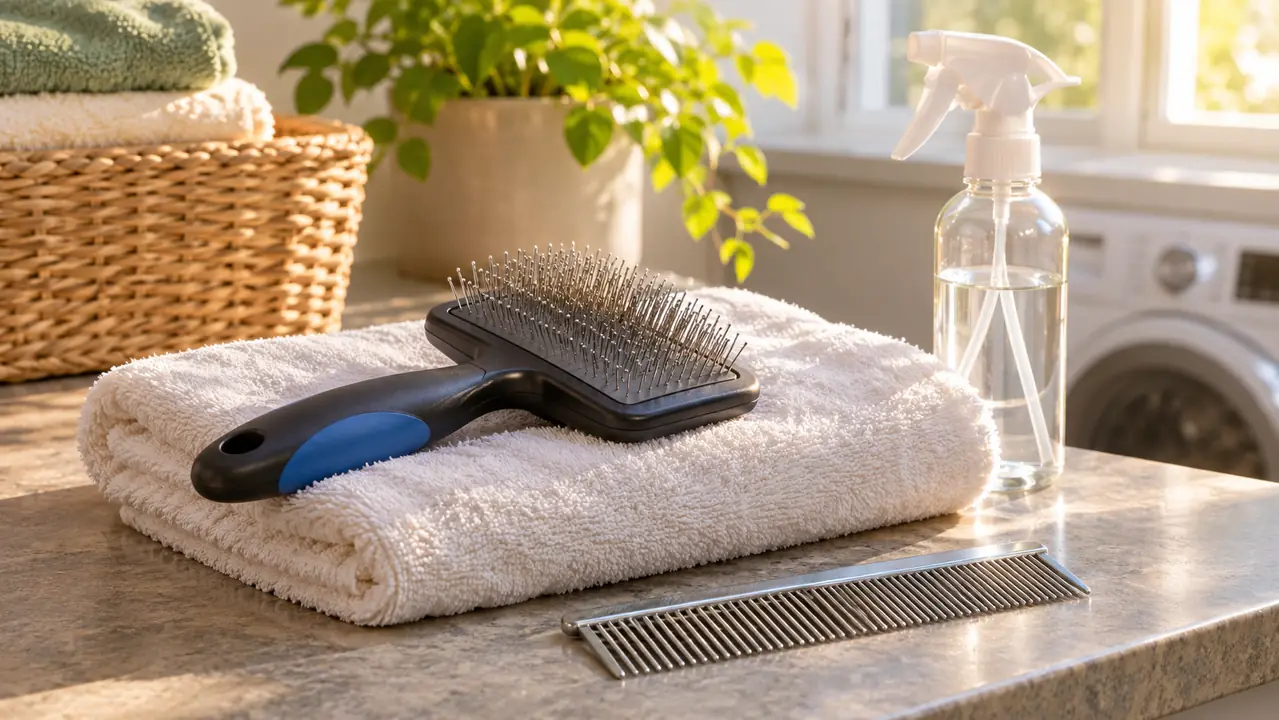
Maintenance is a five-minute job once a week. I pull the loose hair out of the pins with my fingers, then run a comb through the head to lift anything wedged down at the base. Every few weeks I wipe the pins down and let it dry bristle-up on a folded towel. The wood handle has not cracked or swollen, and the finish on the back has not worn through, which after months of weekly use and one accidental drop onto tile is more than I expected from anything with a wooden handle.
The rubber grip has picked up a little coat oil, and that is the entire list of wear. It is not a tool that needs babying. It is also not a tool I would leave in a hot car or soak in the sink, because wood and water do not negotiate.
What I Wish I Had Known Sooner
Three things, in order of how much time they would have saved me. First, brush the dog before the bath, not just after. A wet mat tightens, and if you put a coated Shih Tzu into a sink with the mats still in her coat, you have simply made your own evening worse. Loosening the coat first with the Big G means the shampoo reaches the skin and the towel dry does not turn into a wrestling match on a wet tile floor.
Second, do not work the pins into a bone dry coat. I keep a spray bottle of water with a little conditioner mixed in and mist a section before I brush it. The coat gives, the pins glide, and the dog stops looking at me like I have betrayed her. Nobody told me that for the first two years and I paid for it in knots and dirty looks.
Third, and this is the one I still feel foolish about, learn the line brushing before you buy a better brush. I bought three brushes looking for a tool that would cover for my technique. The technique was the problem the whole time. The Big G is a genuinely better brush, and I would still be finding knots behind Mochi's ears every week if I had kept dragging it flat across the top of her coat like I was sweeping a porch.
What I Liked
- Dense stainless steel pins cover more coat per stroke, so a full brush-out runs about twelve minutes
- The curved back and non-slip grip take the strain out of the hands and wrists
- Gets through armpit and behind-ear mats that a comb could not touch
- Coat dries fluffier and more separated after a bath
- Months of weekly use with no loose pins, no cracked handle, no worn finish
Where It Falls Short
- Large head for a small dog, so the face and feet still need a different tool
- Firm pins punish heavy-handed brushing
- Wood handle has to stay out of the sink and away from a hot car
- Costs considerably more than a drugstore slicker
- Will not fix a coat that has already felted against the skin
Twelve minutes, three times a week, and the knots behind Mochi's ears stopped forming in the first place. That is the whole review.
Who This Is For
This is for the home groomer with a coat that grows and mats, the owner who has already accepted that brushing is a standing appointment three times a week, and the person whose dog has opinions about being handled. If you are currently paying a groomer every six weeks mostly to undo knots you could have caught, this brush is the cheapest way I know to change that math. It also suits anyone with hand or wrist trouble, because the shape does most of the work. If you own a Chris Christensen comb already and liked it, you will like this too.
Who Should Skip It
Skip it if your dog lives in a short clip and gets a quick once-over with whatever is in the drawer, because you will not notice the difference and you will have spent money for nothing. Skip it if you are not going to brush in sections, since the whole advantage evaporates when the brush is dragged flat across the surface. Skip it if you want one tool that does the face, the feet, and the body, because this is not that tool. And skip it if the coat on your dog has already felted solid, because the answer there is a groomer and a clipper, not a brush ordered online at ten at night.
Four years in, the drawer of disappointing brushes is gone. One brush stayed. My hands are better for it, Mochi's ears are better for it, and the routine is short enough that I actually keep it, which after all this time is the only thing that ever mattered.
If the mats keep coming back, start here
A better brush does not fix a skipped routine, but this one makes the routine short enough that I keep it. Months in, that is the honest case for the Chris Christensen Big G.
Amazon See the Chris Christensen Big G on Amazon →