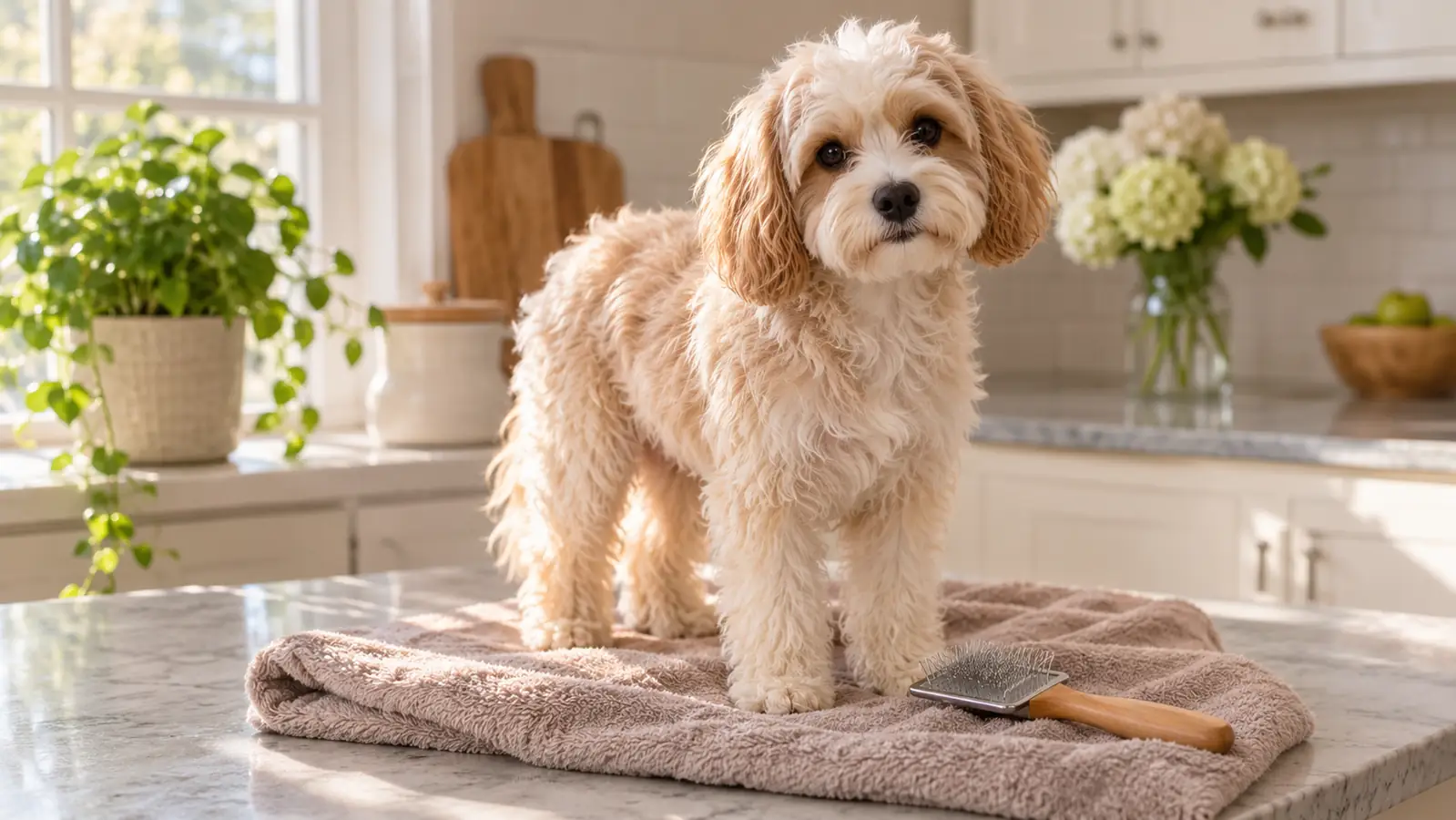
I bought my first slicker brush because a groomer told me, kindly, that Mochi's coat was a little behind. I had been using a pin brush and a metal comb and calling that a grooming routine. Six weeks later I understood the difference. A pin brush moves over the top of a Shih Tzu coat. A slicker gets down into it.
Mochi is seven years old, thirteen pounds, and wears a medium puppy cut with a longer topknot. She mats behind the ears and under her front legs if I blink, and she would rather have her nails done than her feet touched. If your dog is anything like her, the tool matters more than the technique. The one that finally worked in this house is the Chris Christensen Big G, a slicker with stainless steel pins set into a wooden handle. Here are ten reasons it earned permanent counter space in my laundry room.
The brush that finally got under Mochi's mats
Stainless steel pins, a non-slip wooden handle, and 30% more pins than a standard slicker. It is the first tool I reach for, every single time.
Amazon Check Today's Price on Amazon →It Reaches the Skin, Where the Mats Actually Start
Mats do not begin on top of the coat. They begin close to the skin, behind the ears and in the armpits, where loose hair rubs against itself and tightens. A slicker's pins are set at an angle so they catch that underlayer instead of skating over it. The first time I worked the Chris Christensen through the spot behind Mochi's left ear, I found a knot the size of a pea that I had been walking past for a week.
30% More Pins Means Fewer Strokes Per Section
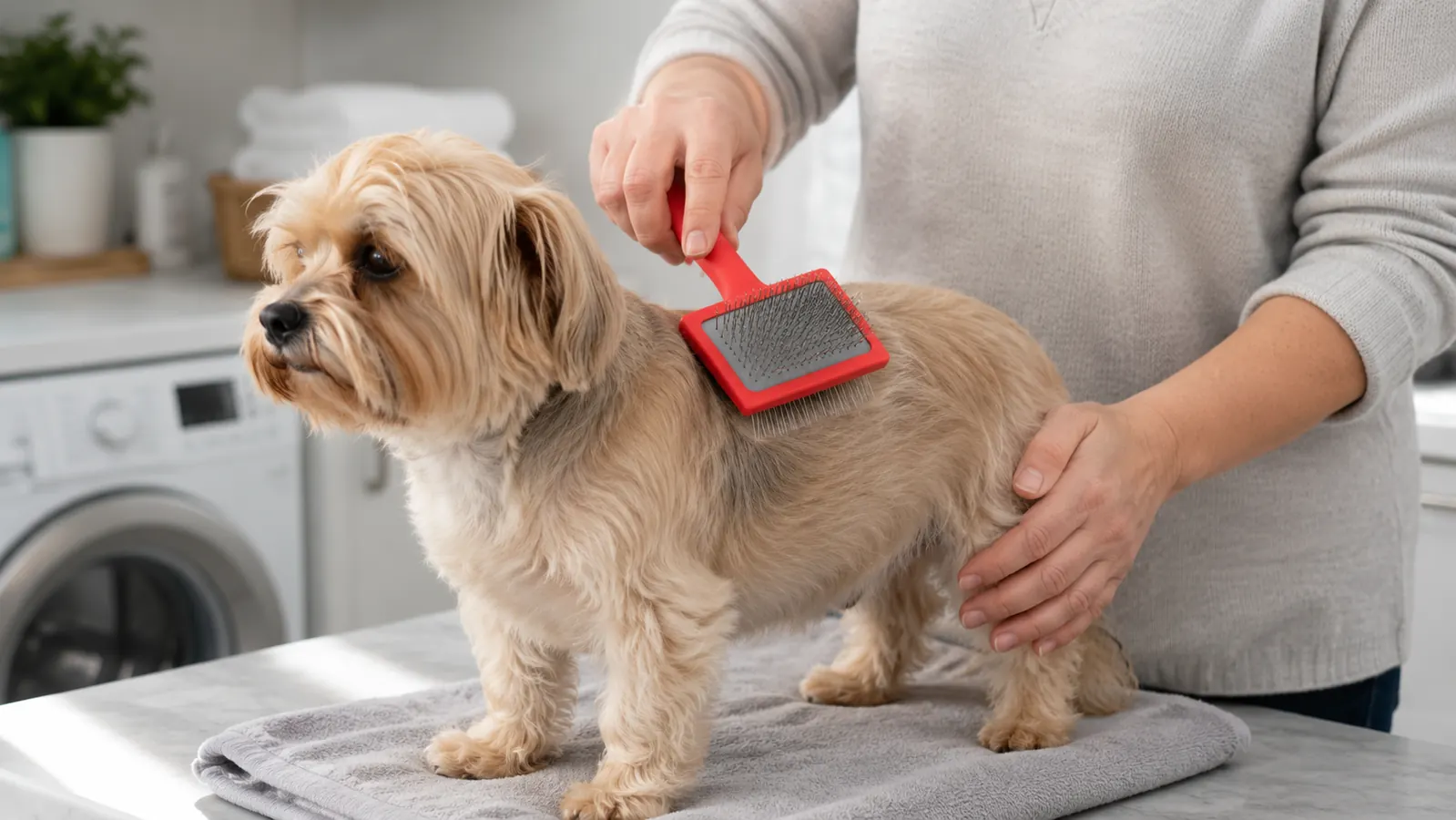
This brush carries 30% more pins than other slickers, which sounds like a line from a catalog until you count your own strokes. Fewer passes over the same square inch means less time, and less time means a dog who is still cooperative when you get to the last leg. On a thirteen-pound Shih Tzu, a full body pass takes me about eight minutes now. It used to take twenty and end with both of us irritated.
Stainless Steel Pins Glide Instead of Scratch
Bargain slickers have pins with rough tips, and you can feel them drag through the coat. Stainless steel holds a smooth tip through repeated washing, which matters here because this brush goes into the utility sink with the towels after every bath. Mochi has thin skin under all that hair, and she will tell you loudly if a tool scratches. She lies down for this one.
The Non-Slip Handle Saves Your Wrist
You would not think a thirteen-pound dog could wear out a hand, but grooming is a few hundred small repeated motions. A slim handle that slips once your palm gets damp is how you end up with a sore thumb by Thursday. This handle has a rubberized non-slip grip and an ergonomic shape. I have a cranky right wrist from thirty years of school nursing, and it is the only brush I can use for a full session without stopping.
It Fluffs the Topknot Instead of Flattening It
The topknot is the one part of the groom that has to look deliberate. The wrong brush presses the hair flat against the skull and the shape is gone. Working from the ends upward with a slicker lifts the coat and gives it volume, so the band sits on something round instead of a flat patch. I tie Mochi's topknot after brushing, never before, and the difference shows in every photo.
It Lifts Trapped Undercoat Before It Becomes a Mat
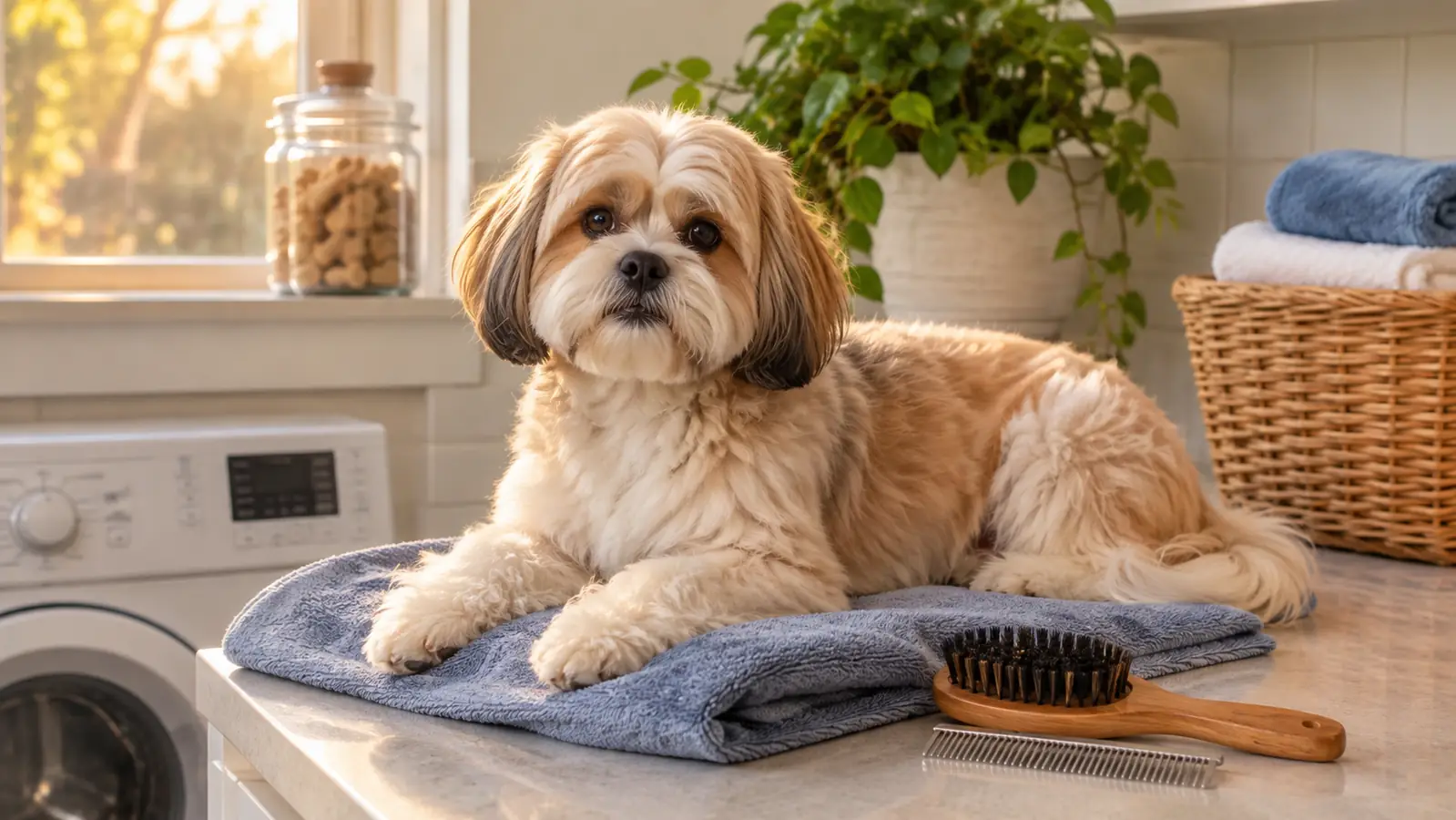
Shih Tzus do not blow coat the way a Labrador does, but they still shed, and that loose hair stays in the coat. The Big G is built to pull trapped undercoat out with fewer strokes. I brush Mochi three times a week for about ten minutes, and the hair that comes out on the pins is the hair that would otherwise be felting itself into her armpits. Catching it early is the whole job.
Bath Day Ends With a Faster Dry
Mochi gets bathed in the utility sink in my laundry room, and wet Shih Tzu coat clumps into little ropes. Running a slicker through damp, towel-dried coat separates those ropes so air can reach them. My dryer time dropped by roughly a third once I started brushing during the dry instead of after it. That is a third less noise, which is a third less stress for a dog who already dislikes the sink.
The Curved Back Gives You Control in Tight Places
The back of this brush has a pronounced curve, so you hold it more like a computer mouse than a paddle. That shape lets you angle the pins into the hollow behind an ear or along the jaw without cranking your wrist. Face and feet are the two places Mochi supervises most closely. She still does not love her feet being handled, but I can get through a foot in a few passes now instead of chasing her across the laundry room.
You Will Reach for It Before the Pin Brush
I still own a pin brush. It is fine for a quick once-over on a clean coat, and it is gentler on a dog who is already matted and sore. But a pin brush does not get under anything, and that is the whole point. If I had counter space for only one tool, the slicker stays and the pin brush goes in the drawer. That is the honest ranking after two years of using both.
It Makes the Professional Groomer Visits Fewer
I used to take Mochi in every six weeks because I could not keep up with her coat between appointments. Now it is a few times a year, mostly for a tidy on the feet and the sanitary trim I would rather not do myself. Ten minutes, three times a week, with a tool that actually reaches the skin, changed the whole schedule in this house.
What I'd Skip
If you are starting from zero, skip the wide-toothed comb and the grocery store slicker. A comb is a diagnostic tool, not a detangler, and a stiff slicker with rough pins will teach your dog to hate being brushed. I would also skip brushing a dry, heavily matted coat with anything at all. Work those mats out in the bath with conditioner, or let a groomer clip them out. Pulling a tight mat off the skin is how you end up with a dog who hides when the brush comes out of the drawer. If I were buying one tool for a Shih Tzu tomorrow, it would be the Chris Christensen Big G. It comes in three sizes, so you can match it to the dog in front of you.
Ten minutes, three times a week, with a brush that reaches the skin, did more for Mochi's coat than two years of six-week appointments.
Ten minutes, three times a week, and the mats stop winning
The Chris Christensen Big G has 30% more pins than a standard slicker, stainless steel tips, and a non-slip wooden handle built for long sessions. It is the first tool I would hand a Shih Tzu owner starting from scratch.
Amazon Check Today's Price on Amazon →